Voters say Rachel Reeves should resign if income taxes are hiked

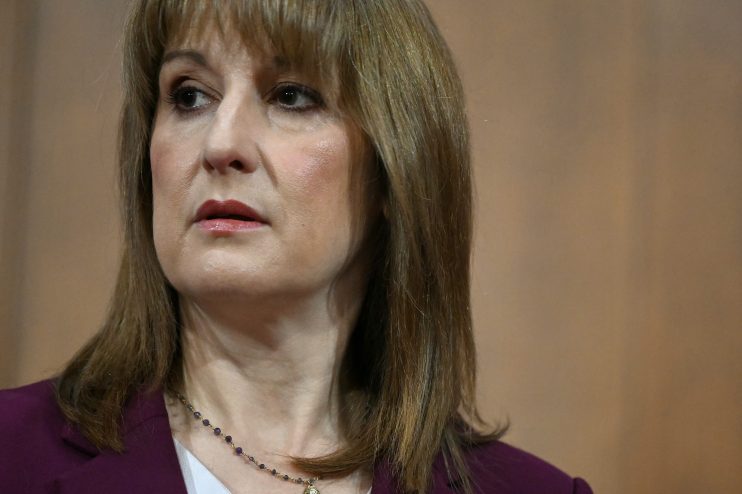
A majority of voters believe Rachel Reeves should resign as Chancellor if she breaks a key Labour manifesto commitment by raising income tax.
Labour’s 2024 election manifesto said the party would not put up taxes on working people, including VAT and income tax.
But in the lead-up to a crucial Budget where the Chancellor is expected to raise tens of billions of pounds in taxes, Reeves has given a series of strong indications that she could breach the commitment.
Now the latest City AM/Freshwater Strategy poll has shown that two thirds (66 per cent) of the UK electorate say that Reeves should quit if she chooses to raise income tax in a fortnight.
Over a third of Labour voters (35 per cent) agree that Reeves should fall on her sword if the manifesto commitment is broken.
The findings pile pressure on the Labour government to stick to its electoral promises, with reports suggesting that Reeves will simultaneously raise the income tax rate by 2p while cutting national insurance for those earning under £50,000 in a bid to soften the blow for lower-paid workers.
The manoeuvre would mean that earners on £75,000 a year would pay £495 more in tax, according to analysis by Quilter. Those earning £125,000 could have to pay an extra £1,745.
Rachel Reeves pins decision on OBR productivity downgrade
On Monday afternoon, the Chancellor told the BBC that manifesto commitments could be dropped due to the economic situation being “significantly worse” than when Labour’s proposals were put together.
“When we put together the manifesto, it had in it our spending commitments and the tax changes that would be needed to pay for those. The truth is what we inherited is significantly worse,” Reeves said.
“Last year I had to address the black hole in the public finances. This year we have had the new challenge of the Office for Budget Responsibility downgrading growth forecasts.
“It would of course be possible to stick with the manifesto commitments. But that would require deep cuts in capital spending.”
But suggestions of a manifesto breach has left some within Labour fretting for their futures.
Culture secretary Lisa Nandy said on the weekend that manifesto commitments “matter” while Labour’s soft-left deputy leader Lucy Powell has called on the government to stick to its tax commitments.
Budget speculation is also intensifying, with new reports suggesting that the Treasury could look to raise some £2bn through hiking dividend tax rates and abolishing the £500 allowance.
Another £2bn could be raised by imposing a limit on the tax-free amount a worker can sacrifice from their salaries through pension contributions, according to reports.
It could mean that employees pay the full rate of national insurance on any pension contribution above £2,000.
The amounts would be meagre in the scale of what’s needed to fill the estimated £30bn fiscal hole, with further taxes needed to be hiked in order to build a larger fiscal buffer.
Reeves and other Labour officials have argued that expected productivity downgrades by the Office for Budget Responsibility (OBR) and instability affecting bond markets have forced the government’s hand in having to make “tough decisions”.
Income tax hikes are ‘inevitable’
Financial advisers at deVere Group warned yesterday that lower growth, higher debt interest payments and sticky inflation meant an income tax hike would be “inevitable”.
“The language has shifted from reassurance to justification,” chief executive Nigel Green said.
“The talk of ‘necessary choices’ and ‘doing what’s right for the country’ is political code for higher personal taxation.”
But City AM‘s latest national poll of UK voters has shown that nearly half (46 per cent) would hold the current Labour government directly responsible for raising income taxes.
Some 37 per cent would blame income tax hikes on rising debt interest payments, which are currently forecast to hit £110bn this year, while just 26 per cent of voters would be prepared to blame the previous Conservative government despite the Chancellor’s efforts to blame her economic inheritance.
More than half of respondents in the nationally-representative poll also appeared to disagree with Labour’s policy direction in the upcoming Budget.
Around 57 per cent said they would prefer tax cuts even if it meant less government spending, while 31 per cent would be happy to pay more tax to support greater spending on public services.
Method note: Freshwater Strategy interviewed n=1,250 eligible voters in the UK, aged 18+ online, between 7 – 9 November 2025. Margin of Error +/- 2.8%. Data are weighted to be representative of UK voters. Freshwater Strategy are members of the British Polling Council and abide by their rules.