Housebuilder shares rocket after Burnham revives Help to Buy

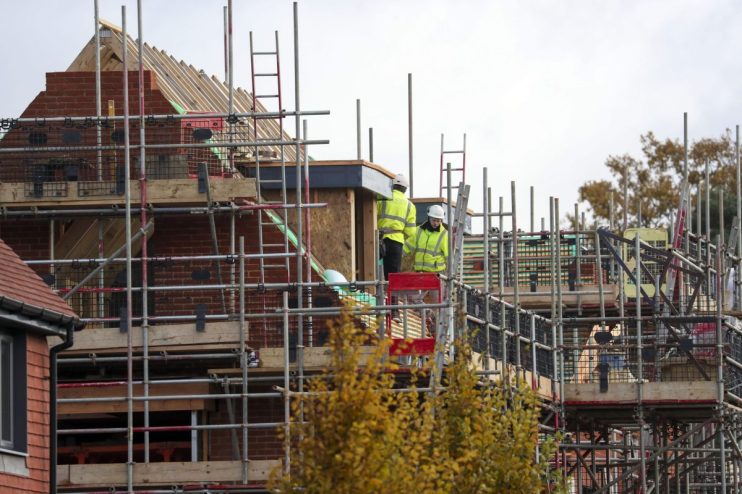
Housebuilder shares have soared after the Prime Minister announced a new Help to Buy scheme, which it is hoped will boost the UK’s construction sector.
FTSE 100 housebuilders Persimmon and Barratt Redrow jumped 15 and 13 per cent in early trading, lifting the blue-chip index to early gains.
FTSE 250-listed Vistry took the biggest jump on Monday morning, as shares in the struggling housebuilder bounced by more than 22 per cent. Mid-cap builders Taylor Wimpey and Bellway jumped 15 and 14 per cent each.
Last week, Vistry’s shares slumped after new boss Adam Daniels unveiled plans to drastically downsize the builder to help it weather a tumultuous period for the housebuilding sector.
The government’s new “Your first home” scheme will offer first-time buyers a 20 per cent equity loan towards a deposit of 2.5 per cent, with an initial interest-free period.
Andy Burnham has said the programme will help young people who cannot rely on the “bank of mum and dad” get on the housing ladder.
But commentators said the primary aim of the policy will be to help out Britain’s struggling housebuilders by upping demand, as the Iran war pushes up building costs and flattens consumer confidence.
Housebuilders have long been calling for a return to the Help to Buy scheme, which was first set up by George Osborne in 2013 but ended in 2022.
Thinktanker Robert Colvile said: “The point of Help to Buy, in both this version and the original, is to get housebuilding going again – helping people into home ownership is nice but it’s really designed as a construction stimulus.”
Christmas comes early for housebuilders
Anthony Codling, an analyst at RBC Capital Markets, said the new Help to Buy scheme will be “the big catalyst the [housebuilding] sector as a whole needed for a re-rating”.
“Whilst most of us have 88 sleeps to Christmas, Christmas has come early for the UK housebuilders,” he said.
Economists and property experts are divided over whether the initial Help to Buy scheme had a positive impact on the UK’s housing market.
A recent official report found that the scheme had “very high value for money” but the Institute for Fiscal Studies said in April that the programme had a “limited” impact on social mobility, mainly helping those who had few barriers to home ownership.
The government will announce details of the new scheme at the Budget but it is understood that changes will be made from Osborne’s programme to better target support at those who need it most.
Covile said the government should focus on cutting the policy costs facing housebuilders rather than taking only demand-side measures “on the same ridiculous cost base”.
Charlie Lamdin, founder of BestAgent, warned the scheme is unlikely to address the wider issue of affordability.
“Reviving Help to Buy, whatever name it goes by, would be the wrong answer to the right question.
“I understand the instinct. Young people are locked out of home ownership, and the Government wants to help first-time buyers. I share that goal completely.
“Let’s learn from Help to Buy, not repeat it.”
Housebuilders welcome new scheme
Housebuilders have welcomed the new Help to Buy scheme. The Home Builders Federation, a top industry body, said the new scheme will likely have “a significant impact on the property sector and housebuilding in particular”.
Dean Banks, chief executive of Barratt Redrow, said: “A well-designed equity loan scheme will help young people to take that first step on the housing ladder while giving housebuilders greater confidence to invest in building more new homes of all tenures, creating jobs and driving economic growth across the country.”
Dean Finch, chief executive of Persimmon, praised Burnham’s announcement and said the new scheme will “support more young families to afford their first home”.
The government had pledged to build 1.5m homes by the next general election, expected in 2029, but housing secretary Angela Rayner has admitted that there is only a “slim chance” of this target being met.
This goal would require about 300,000 homes to be built every year but only 203,000 were built in the 12 months to June, according to data compiled by the BBC.