Global AI sell-off eases after bruising end of month performance

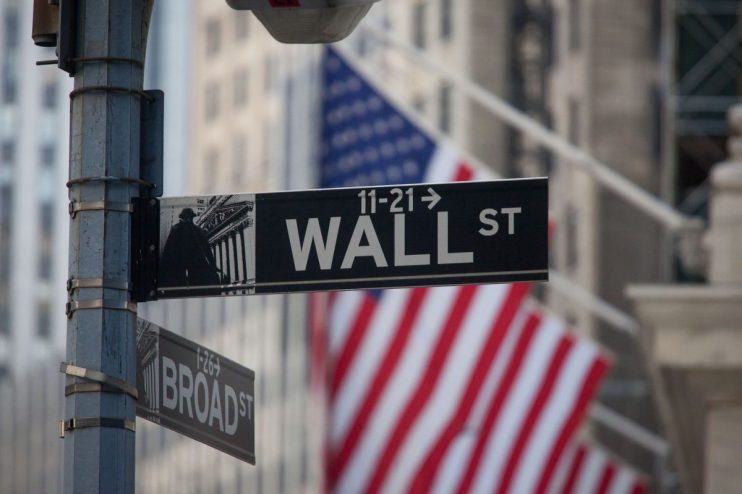
The global AI sell-off eased on Monday as falling oil prices buoyed investors’ moods and sent them flocking back to tech stocks.
After a bruising rout in tech shares on Wall Street last week, the Nasdaq Composite Index and the S&P 500 rose 1.2 per cent and 0.7 respectively on market open.
It’s a sharp recovery for the Nasdaq Composite, which slipped 3.5 per cent on Friday, capping off its worst month in over a year. Roughly $3 trillion has been wiped off the tech-heavy index since its peak early last month.
Amazon rebounded from last week’s decline, which had been caused by weaker than expected sales, with a gain of 4.5 per cent.
Fellow Magnificent Seven companies Microsoft and Nvidia increased 0.6 per cent and 1.9 per cent respectively.
But chipmaker Intel, which led Friday’s losses after a gloomy forecast caused shares to plunge 28.5 per cent, failed to rebound on market open. Shares declined a further 2.2 per cent.
Ajay Rajadhyaksha, global chair of research at Barclays, said in a note to clients the “big call now is whether recent weeks are the first signs of an impending AI collapse”, though he added that “in general, earnings have remained healthy”.
Caution in Asia
Wall Street’s came after stocks recovered in Asia, with Saxo market strategist Neil Wilson saying the region’s tech stocks were “stabilising”.
South Korea’s blue-chip index increased 2.2 per cent, buoyed by heavyweights Samsung Electronics and SK Hynix, which gained 3.1 per cent and 3.8 per cent respectively.
Hong Kong’s Hang Seng gained 0.4 per cent, while the Shanghai Composite rose 1.1 per cent.
But there were “soft spots”, including Japan’s Nikkei 225 which dropped 0.3 per cent. Losses were led by memory-chip manufacturer Kioxia which tumbled 15.7 per cent after its latest earnings update forecast that demand for its products is beginning to cool.
Fujitsu also extended last week’s losses, slipping 2.9 per cent to 3,514 yen (£16.5), and Open AI investor Soft Bank fell 1.5 per cent. This takes the group’s losses to 51 per cent from its June peak.
Energy reversal and midterms
The easing on stocks came amid falling energy prices. Brent crude, the international oil benchmark, fell 6.9 per cent to $106.4 per barrel.
Patrick Munnelly, partner at Tickmill Group, said: “The primary macro relief valve came via energy markets. Brent crude slid… following reports that the White House favours extending diplomatic avenues with Tehran ahead of the US midterms before considering military escalation.”
Analysts are awaiting the outcome of the US midterms on Tuesday, with polls putting Republicans at risk of losing control of both the House of Representatives and the Senate.
Some have warned that Trump could launch renewed attacks on Iran once the constraints of the election are over, ultimately sending oil prices higher once more.
Jason Hollands, managing director of Bestinvest, said that the performance of Democrats in the election could also cause AI stock’s rebound to end.
“AI is an area where the details will matter, especially as it has been such a major driver of financial markets in recent years, the power of which was evident in last week’s rout,” he said.
“Some Democrats have proposed making data-centre operators bear more of the electricity costs created by their projects. Any such change could affect the economics of new data centres and the wider AI investment boom.”