Former City traders’ fraud convictions overturned

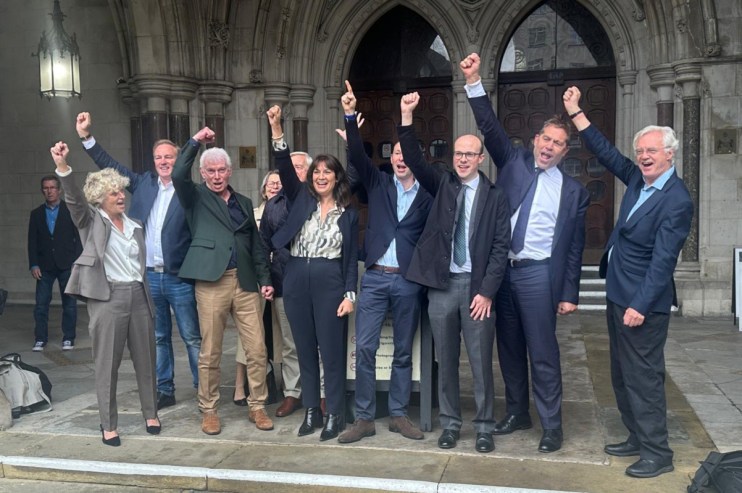
A group of five former City traders previously convicted of rigging the Libor and Euribor interest rates have had their fraud convictions overturned by the Court of Appeal.
The five investment bankers, who previously worked at Barclays, had their convictions quashed having served jailtime for conspiring to rig the now-defunct interest rates in the run-up to the financial crisis.
The decision comes just over a year after the Supreme Court’s landmark decision to overturn a similar ruling on Tom Hayes and Carlo Palombo last year. The two former City traders became the faces of the so-called ‘Libor scandal’ which saw the Serious Fraud Office (SFO) pursue a volley of prosecutions in the wake of the 2008 crash.
On Wednesday, the convictions of Jay Merchant, Jonathan Mathew, Philippe Moryoussef, Alex Pabon and Colin Bermingham, all former Barclays traders, were also overturned, in a further unravelling of what are some of the SFO’s most prominent convictions.
The Criminal Cases Review Commission (CCRC) referred the cases to the court in January after the fraud watchdog, which brought the prosecutions over a decade ago, said it would not seek a retrial against Hayes and Palombo.
Lord Justice Edis said on Wednesday that the five former traders’ convictions will be quashed, with full reasons to be set out in due course.
The Court of Appeal has yet to consider the appeal of Christian Bittar, who worked at Deutsche Bank. Bittar has argued that, despite the SFO contending his conviction is safe, his conviction should also be overturned.
In a statement following the ruling, Matthew said: “Having this conviction quashed is not simply about correcting the record; it’s about finally having validation that this is an injustice that never should have happened.”
SFO won’t oppose the appeals
Former UBS trader Tom Hayes was handed the longest prison sentence of any white-collar criminal in British legal history in 2015 when he was found guilty of rigging Libor, a now-extinct interest rate set by banks that determined borrowing costs around the globe.
The ruling remains one of the UK’s most high-profile financial crime convictions and saw the former trader serve half of an 11-year prison sentence between 2015 and 2021. After several unsuccessful appeals, the investment banker’s conviction was overturned by the Supreme Court last July when judges ruled that the jury at his initial trial had been misled.
The judgment immediately threw the convictions of the Barclays traders into uncertainty, and prompted the five investment bankers to apply to clear their names.
“Today is a fantastic day for all those who have finally been exonerated,” Hayes said on Wednesday, adding: “Sadly, the UK remains a global outlier in characterising what was standard industry practice as criminal.”
Tom Bushnell, partner at Hickman & Rose, said the ruling “recognises that this error went on to be repeated in the other Libor/ Euribor prosecutions.”
Bushnell said the SFO “must reflect on how its repeated failure to ensure these trials were conducted fairly contributed to the collapse of its most significant series of prosecutions of the past fifteen years.”
Jason Williams, head of division at the SFO, said: “The Supreme Court found that there was ample evidence on which a properly directed jury could have convicted Tom Hayes and Carlo Palombo. We deemed it was not in the public interest to seek retrials of these two individuals.
“After carefully considering this judgment and the full circumstances we do not oppose the appeals of five individuals convicted by juries in relation to Libor and Euribor. We communicated our decision last year to each of the people affected by the judgment.”
Pabon, now 48, thanked his lawyers, his family and Tom Hayes who “refused to let [the case] go and pushed this through for all of us”.
“The Serious Fraud Office now accepts my conviction is unsafe,” he added. “The SFO did not build this case alone: Barclays played a large role in it.”
Barclays declined to comment.