Bailey calls for greater AI testing as risks to economy rise

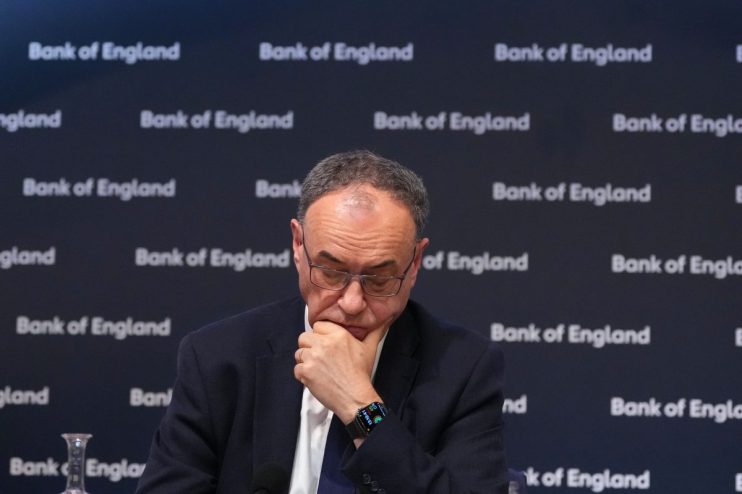
Andrew Bailey has called on governments to ramp up testing on frontier AI models before they are launched to the public, warning that advanced artificial intelligence posed sophisticated threats to the banking, markets and payments systems.
In the first of a series of letters on the fledgling technology, the governor of the Bank of England sounded the alarm on the “closed loop” nature of the most powerful AI tools, which he said reduces “the ability of society to exercise meaningful oversight and intervention”.
Calling for an agreed way for regulators and policymakers to test and intervene in self-improving models, Bailey said: “Testing is essential if we are to understand the behaviour of increasingly complex systems, identify vulnerabilities and establish confidence in the safeguards that are intended to contain them.”
The intervention is the most strident call yet from the central banking chief to ramp up oversight of the rapidly developing industry, and comes as several of the world’s largest AI firms report losing control of their most advance models.
OpenAI paused testing of its frontier model last week, after it was found to have breached Australia’s public healthcare system and attempted to break into several US federal departments. And arch-rival Anthropic has also called for a joint effort to “pace the frontier” amid concerns over its self-improving models.
Bailey’s remarks echo findings made by the Bank of England’s Financial Policy Committee, which warned that AI’s rapid inroads and the financial fallout from the Iran war had combined to mean the overall threat level the global economy was higher than at its last report.
Committee members warned the Middle East conflict – and its effect on energy prices and borrowing costs – had made a financial crisis in which credit markets and frothy stock markets simultaneously collapse more likely.
“The re-escalation of the conflict in the Middle East has renewed uncertainty around growth and the path of interest rates in a number of advanced economies,” they wrote, “reintensifying the risks that vulnerabilities in sovereign debt markets, risky asset valuations, and risky credit markets crystallise at the same time.”
Interlinked AI debt could ‘amplify losses’ – Bank of England
The Bank singled out the vast proliferation of AI-related debt, which it said had continued to be issued freely despite higher interest rates brought on by the Iran war. According to the central bank’s figures, so-called hyperscalers – the largest technology firms associated with the aritifical intelligence rollout – are on course to issue some $450bn of debt so far this year, more than double the total issuance in 2025. That is considerably more than the UK government, which despite issuing a near-record amount of gilts, is only on course to sell $330bn for the entirity of 2026, officials said.
Bailey’s monetary authority also sounded the alarm on the increased complexity of technology-linked credit. Not only is debt rapidly filtering across public bonds, private markets and traditional bank lending, but AI firms are increasingly engaging in so-called “circular arrangements”, whereby tech giants effectively finance one another.
“The combination of increasing leverage, opacity and, at times, ‘circular arrangements’ that can be associated with this financing, could complicate the assessment of risks and could amplify losses if expectations disappointed,” the committee’s report said.
Officials added that AI’s increasing sway over the wider global economy could have further knock-on effects for stock markets and already-distressed sovereign debt market were investors recalibrate their optimistic estimates on the technology’s financial benefits.
They said: “Concerns about the sustainability of AI-related earnings and capital expenditure growth may have contributed to market sentimet. The risk of a sharper correction persists, notably if there is a more significant shock to earnings expectations reflecting concerns around the pace of AI development or adoption.”